
The New Literary Status Symbol? Why ‘Human Authored’ Books Are Emerging in the Age of AI

For centuries, the central bargain of publishing was remarkably simple: a reader bought a book with the assumption that a person had written it. In 2026, that assumption is becoming a product feature of its own.
Generative AI has moved from a technological curiosity to a defining argument inside publishing. Authors, agents and editors are now confronting questions that would have sounded strange only a few years ago: How much AI assistance is too much? Can anyone reliably prove that a manuscript was written by a human? And will readers eventually look for a human-authored label the way shoppers look for an organic or fair-trade seal?
Those questions have become especially timely this summer as controversies over suspected AI use have collided with new industry efforts to certify human writing. The result is not simply a debate over technology. It is a debate over authorship itself.
Publishing’s AI problem has become a trust problem
The latest wave of concern is not centered on whether artificial intelligence can generate readable prose. It clearly can. The harder problem is that publishers, booksellers and readers increasingly have to decide what role AI played in producing a book — often without a reliable way to know.
The Wall Street Journal reported this week that the publishing industry is struggling with uncertainty over suspected AI authorship, inconsistent standards and the limitations of AI-detection tools. The controversy has reached major book deals rather than remaining confined to low-cost self-publishing.
One of the most prominent examples involved debut crime novelist Jerry Falade. The Guardian reported on July 31 that a deal for his novel Call Me, I’ll Hide the Body collapsed after questions were raised about possible AI use. Falade denied using AI and argued that the scrutiny was influenced by racial bias. His agents withdrew the manuscript after saying they could not verify that AI had not been involved.
That distinction matters. Suspicion is not proof. AI detectors can produce disputed results, and a publishing culture that treats an algorithmic score as definitive evidence could create a second problem while attempting to solve the first.
The rise of the ‘Human Authored’ label
The Authors Guild has responded by attempting to make human authorship independently visible. Its Human Authored certification allows qualifying authors to register individual books and use a certification mark indicating that the text was written by a human rather than generated by AI, aside from limited uses permitted by the program.
The Guild expanded the program to all authors with books published in the United States in March 2026. Its public database allows readers to search for certified titles, authors and registration numbers.
The definition is more nuanced than an outright ban on technology. According to the Guild, research, brainstorming, outlining and certain auxiliary uses of generative AI do not necessarily disqualify a work; the crucial line is whether AI generated the book’s actual text beyond minimal exceptions.
That may turn out to be one of the most consequential distinctions in the next era of publishing: AI as a tool around the writing process versus AI as the writer.
Why a label could change how books are marketed
Publishing has always sold more than words. It sells provenance: the author’s life, expertise, imagination, voice and relationship with readers. Book tours, author photographs, signed editions, interviews and literary festivals all reinforce the idea that a work came from a particular mind.
Generative AI makes that provenance newly valuable. If machine-generated books become inexpensive and abundant, scarcity may migrate away from content itself and toward verifiable human creation. A book marketed as human-written could become not merely an ethical statement but a commercial differentiator.
The analogy is imperfect, but familiar. Consumers already pay premiums for handmade goods in markets where factory-made alternatives are cheaper and faster. Literature may be entering its own version of that economy, where the process behind a work becomes part of what the buyer is purchasing.
The line between assistance and authorship is getting harder to draw
Modern writing already depends on software. Spell-checkers, grammar tools, search engines, transcription services and digital editing systems have been part of professional workflows for years. Generative AI complicates the picture because a single system can move fluidly from correcting punctuation to brainstorming scenes to producing entire paragraphs.
That continuum makes simplistic rules difficult. A novelist who asks an AI system for a list of historical research leads is doing something fundamentally different from asking it to draft a chapter. Yet both actions may be described casually as ‘using AI.’
The Authors Guild’s updated best-practices guidance acknowledges that writers are already using AI in different ways and emphasizes the legal and professional risks attached to different uses. The organization has also published model contract clauses addressing AI training, translations, audiobook narration, an author’s own AI use and publisher-side AI editing.
Why AI detectors cannot settle the argument
The temptation is to imagine a technical solution: run every manuscript through a detector and let software decide whether the author is human. The reality is much messier. Writing styles vary dramatically, people edit machine-generated text, machines imitate human irregularities, and human writers can produce prose that automated systems mistakenly flag.
That is why the current dispute is as much about verification and disclosure as detection. A trustworthy system may ultimately depend less on guessing from the finished prose and more on creating transparent chains of authorship — contracts, drafts, editorial histories, declarations and voluntary certification.
Readers may ultimately decide the standard
The publishing industry can create policies, but readers will determine whether human authorship carries economic value. If buyers do not care who — or what — generated the text, certification may remain a niche distinction. If readers begin actively seeking books made by people, the label could become a meaningful part of publishing and bookselling.
There is reason to believe the identity of the creator still matters. Literature is not consumed only for information. Readers follow authors because of voice, worldview and the sense that another human consciousness is on the other side of the page.
That relationship is difficult to quantify, but it may become easier to notice once it is no longer guaranteed.
The next literary status symbol may be proof that a person wrote the book
The great irony of generative AI is that a technology built to imitate human creativity may make human creativity more visible as a category. For most of publishing history, no one needed a seal confirming that a novel was written by a person. The idea would have been absurd.
In 2026, it is becoming plausible.
The question facing publishing is therefore larger than whether authors should use ChatGPT or whether AI-generated novels belong on store shelves. The deeper question is what readers believe authorship means — and whether knowing that a person chose every sentence will become part of a book’s value.
If that happens, the most powerful new label in publishing may not advertise a technology at all. It may simply say: a human made this.
Sources & further reading
The Wall Street Journal: AI Has Plunged the Book Publishing Industry Into Utter Chaos
Authors Guild: Human Authored Certification
Authors Guild: Expanded Human Authored Certification Program
Authors Guild: Updated AI Best Practices for Writers
The Guardian: Crime novel deal collapses amid questions over AI use
Image credit
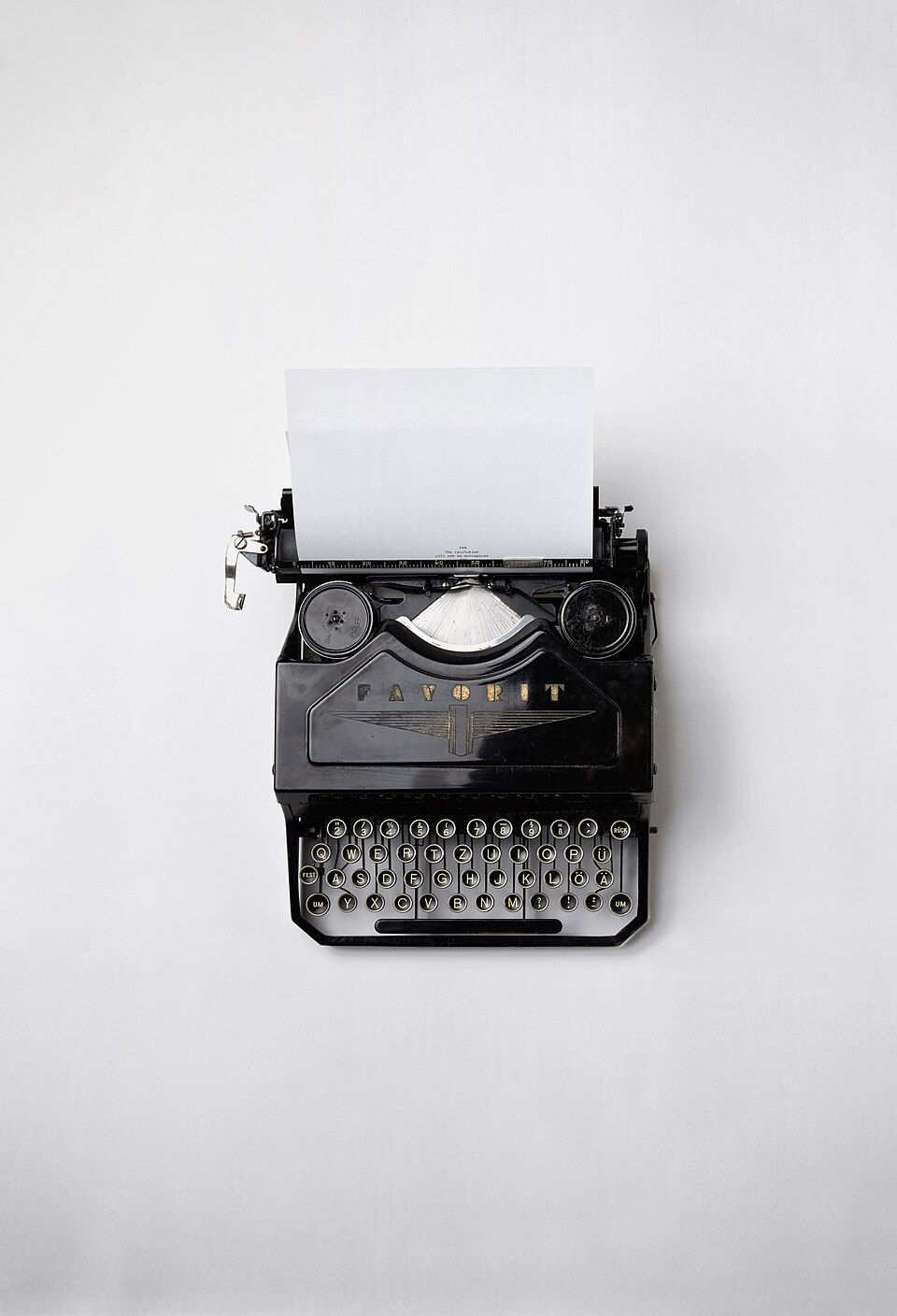
Header photo by Daniel Forsman on Unsplash. Free to use under the Unsplash License.


Comments